
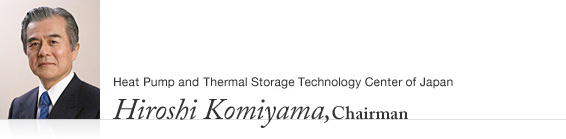
Ten years have passed since the adoption of the Paris Agreement, but global warming has become increasingly serious, and realizing a decarbonized society is an urgent issue for humanity. At COP30, Japan called for international efforts to achieve the 1.5℃ target by reducing greenhouse gas emissions. To play a part in this effort, we need to aim for "thorough energy conservation" and "expanding renewable energy."
In 2025, “The 7th Strategic Energy Plan”, which outlines the basic direction of Japan's energy policy, and “The GX2040 Vision”, a national strategy aiming to achieve both decarbonization and economic growth, were formulated by the Government of Japan. These plans call for the maximum introduction of renewable energy as a primary power source as the direction of future policies and strategies, and also clearly state the promotion of the introduction of heat pumps as part of efforts to conserve energy and transition to non-fossil fuels on the demand side. Furthermore, "The Plan for Global Warming Countermeasures" also clearly states that promoting the introduction of heat pumps is an important measure for energy conservation in the residential, commercial, and industrial sectors.
Currently, the largest energy demand other than electricity is heat demand, with kerosene for household use and heavy oil for factories accounting for nearly 40% of the total. The key to making this heat demand non-fossilization is the heat pump. A heat pump is a technology that uses electricity to extract more heat from the air than it consumes electricity and can supply many times more heat than it consumes electricity. There is no doubt, both logically and technically, that running heat pumps with electricity from renewable energy sources will become one of the basic technologies of the next generation.
Another advantage of heat pumps is that they can store the heat they generate. Solar and wind power are important renewable energy sources; power systems have been based on the premise of "supply according to demand" to deal with output fluctuations so far. However, going forward, it will be important to consider the perspective of "matching demand to supply." Heat pumps & thermal storage systems efficiently generate and store thermal energy, then extract it when needed. They adjust the demand of electricity, and together with storage batteries, they contribute to optimizing electricity demand.
Furthermore, in the event of an emergency, the water from the heat storage tank can be used for firefighting or daily use, making it an important disaster impact reduction system.
With these characteristics as a background, the cumulative number of shipments of the residential heat pump water heater "Eco Cute" exceeded 10 million units in March 2025, and its popularity is steadily expanding. As Japan's only national center for heat pumps and thermal storage, the Heat Pump & Thermal Storage Technology Center of Japan (HPTCJ) will work to promote the widespread use of heat pumps & thermal storage systems in a wide range of fields both domestically and internationally, thereby contributing to the realization of carbon neutrality.
HPTCJ will celebrate its 40th anniversary in 2026. Building on our past achievements, we will continue to take on new challenges to popularize and promote heat pump and thermal storage systems for the next generation.
We would appreciate your continued support and cooperation.
January, 2026